'Margin of Safety'
The "Margin of Safety" is a timeless classic for value investing. Published in 1991, the book offers invaluable insights into the principles and practices of investing with a margin of safety, emphasising the importance of patience in achieving long-term success in the financial markets.
Book Summary:
- Margin of Safety:
Seth emphasises the need to buy assets below their intrinsic value to protect against downside risks and enhance long-term gains. Buying something cheaper than its worth is easier said than done, but principles in how to think about this are timeless. - Contrarian Investing:
Resisting herd mentality and seeking opportunities where others fear to tread can lead to potential rewards. He teaches the value of independent thinking. - Risk Management:
Thoroughly assessing and mitigating risks, considering both financial and non-financial factors, is essential for successful investing. - Patience:
Successful outcomes often require time, emphasising the importance of patience and avoiding impulsive actions driven by the allure of quick gains. - Thorough Analysis:
Rigorous analysis, including assessing intrinsic value, evaluating financial statements, and understanding underlying fundamentals, is necessary before making investment decisions.
Lessons Learnt:
- Avoid Excessive Diversification:
Klarman suggests that thorough research, selective investment choices, and maintaining a margin of safety are more effective strategies than diluting potential returns through excessive diversification. This approach aligns with the belief that a well-researched, focused portfolio can yield higher returns with reduced risk when compared to spreading investments thinly across various assets. - Avoiding Excessive Leverage:
Warning against excessive borrowing and leverage, which can amplify risks and jeopardise financial stability, encourages prudence in using leverage. - Emotion-Free Decisions:
Cautioning against allowing emotions to influence investment decisions promotes rational and disciplined decision-making, avoiding impulsive actions driven by fear or greed. - Staying Informed and Adaptable:
Emphasises the need to stay informed about market trends and adapt investment choices accordingly. Klarman champions continuous learning and to adjust approaches according to ones personality and market changes. - Capital Preservation:
Highlighting the importance of preserving capital by avoiding significant losses, and recognising that protecting capital is key to long-term success in investing.
The "Margin of Safety," imparts a wealth of knowledge and wisdom gleaned from decades of experience in the world of investing. This is an indispensable resource for investors seeking to navigate the uncertainties of the market with confidence and integrity, ensuring they are well-prepared to weather any storm. We certainly enjoyed the read, we hope you do too.
'Margin of Safety'
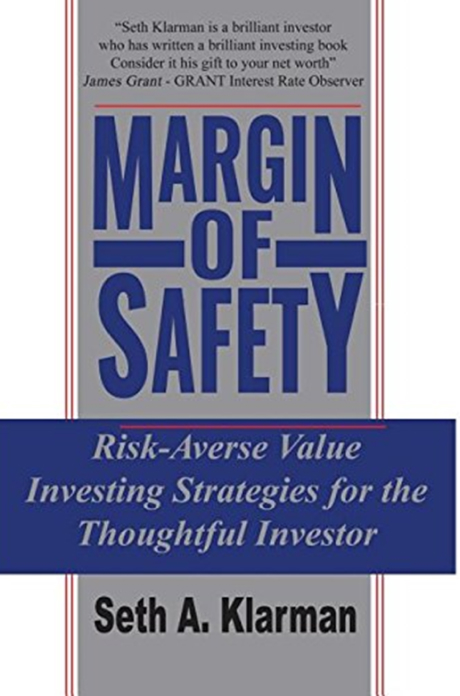
The "Margin of Safety" is a timeless classic for value investing. Published in 1991, the book offers invaluable insights into the principles and practices of investing with a margin of safety, emphasising the importance of patience in achieving long-term success in the financial markets.
Book Summary:
- Margin of Safety:
Seth emphasises the need to buy assets below their intrinsic value to protect against downside risks and enhance long-term gains. Buying something cheaper than its worth is easier said than done, but principles in how to think about this are timeless. - Contrarian Investing:
Resisting herd mentality and seeking opportunities where others fear to tread can lead to potential rewards. He teaches the value of independent thinking. - Risk Management:
Thoroughly assessing and mitigating risks, considering both financial and non-financial factors, is essential for successful investing. - Patience:
Successful outcomes often require time, emphasising the importance of patience and avoiding impulsive actions driven by the allure of quick gains. - Thorough Analysis:
Rigorous analysis, including assessing intrinsic value, evaluating financial statements, and understanding underlying fundamentals, is necessary before making investment decisions.
Lessons Learnt:
- Avoid Excessive Diversification:
Klarman suggests that thorough research, selective investment choices, and maintaining a margin of safety are more effective strategies than diluting potential returns through excessive diversification. This approach aligns with the belief that a well-researched, focused portfolio can yield higher returns with reduced risk when compared to spreading investments thinly across various assets. - Avoiding Excessive Leverage:
Warning against excessive borrowing and leverage, which can amplify risks and jeopardise financial stability, encourages prudence in using leverage. - Emotion-Free Decisions:
Cautioning against allowing emotions to influence investment decisions promotes rational and disciplined decision-making, avoiding impulsive actions driven by fear or greed. - Staying Informed and Adaptable:
Emphasises the need to stay informed about market trends and adapt investment choices accordingly. Klarman champions continuous learning and to adjust approaches according to ones personality and market changes. - Capital Preservation:
Highlighting the importance of preserving capital by avoiding significant losses, and recognising that protecting capital is key to long-term success in investing.
The "Margin of Safety," imparts a wealth of knowledge and wisdom gleaned from decades of experience in the world of investing. This is an indispensable resource for investors seeking to navigate the uncertainties of the market with confidence and integrity, ensuring they are well-prepared to weather any storm. We certainly enjoyed the read, we hope you do too.
Categories