Why Nations Fail. The Origins of Power, Prosperity and Poverty
James A. Robinson and Daron Acemoglu explore the role of political and economic institutions in shaping the success or failure of nations.
Book Summary:
- Inclusive vs. Extractive Institutions:
The book presents a fundamental dichotomy between inclusive institutions that empower a broad segment of society and extractive institutions that concentrate power and wealth within a select few. - Historical Analysis:
Through historical examples, the authors demonstrate how the type of institutions a society adopts significantly influences its economic and political trajectory. - Role of Political Centralisation:
The book explores the impact of political centralisation on the development of institutions. It argues that centralised power can lead to extractive institutions, hindering economic progress. - Dynamic Interplay:
Acemoglu and Robinson highlight the dynamic interplay between political and economic institutions. Political institutions shape economic institutions, which, in turn, influence the distribution of power and wealth. - Path Dependence:
The concept of path dependence is central to the book. The authors argue that historical events and institutional choices can set a nation on a path that is difficult to alter, leading to persistent patterns of success or failure.
Lessons Learnt:
- Institutions Matter:
The book underscores the pivotal role of institutions in determining a nation's success or failure. Inclusive institutions are crucial for fostering prosperity. - Power and Prosperity:
Concentrated power leads to extractive institutions, which hinder economic development. Broad-based political and economic participation is essential for sustained prosperity. - Political Centralisation's Pitfalls:
The book suggests that excessive political centralisation can contribute to extractive institutions. Decentralised political power can be instrumental in fostering inclusive institutions. - Potential for Change:
While the book acknowledges the challenges posed by entrenched institutions, it also suggests that change is possible through concerted efforts to shift towards more inclusive structures. We see many of these issues hinder or push businesses to prosperity too. There is a lot to learn from nations when it comes to individual businesses.
The book provides a comprehensive framework for understanding the complex interplay of political and economic forces that determine the fate of nations. We see a similar interplay with Macro and Micro factors in our financial markets playing out in the valuations of listed businesses today. We certainly enjoyed the read, we hope you do too.
Why Nations Fail. The Origins of Power, Prosperity and Poverty
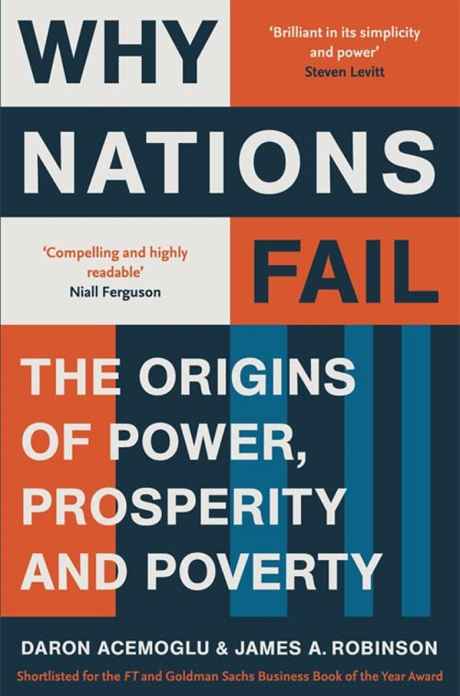
James A. Robinson and Daron Acemoglu explore the role of political and economic institutions in shaping the success or failure of nations.
Book Summary:
- Inclusive vs. Extractive Institutions:
The book presents a fundamental dichotomy between inclusive institutions that empower a broad segment of society and extractive institutions that concentrate power and wealth within a select few. - Historical Analysis:
Through historical examples, the authors demonstrate how the type of institutions a society adopts significantly influences its economic and political trajectory. - Role of Political Centralisation:
The book explores the impact of political centralisation on the development of institutions. It argues that centralised power can lead to extractive institutions, hindering economic progress. - Dynamic Interplay:
Acemoglu and Robinson highlight the dynamic interplay between political and economic institutions. Political institutions shape economic institutions, which, in turn, influence the distribution of power and wealth. - Path Dependence:
The concept of path dependence is central to the book. The authors argue that historical events and institutional choices can set a nation on a path that is difficult to alter, leading to persistent patterns of success or failure.
Lessons Learnt:
- Institutions Matter:
The book underscores the pivotal role of institutions in determining a nation's success or failure. Inclusive institutions are crucial for fostering prosperity. - Power and Prosperity:
Concentrated power leads to extractive institutions, which hinder economic development. Broad-based political and economic participation is essential for sustained prosperity. - Political Centralisation's Pitfalls:
The book suggests that excessive political centralisation can contribute to extractive institutions. Decentralised political power can be instrumental in fostering inclusive institutions. - Potential for Change:
While the book acknowledges the challenges posed by entrenched institutions, it also suggests that change is possible through concerted efforts to shift towards more inclusive structures. We see many of these issues hinder or push businesses to prosperity too. There is a lot to learn from nations when it comes to individual businesses.
The book provides a comprehensive framework for understanding the complex interplay of political and economic forces that determine the fate of nations. We see a similar interplay with Macro and Micro factors in our financial markets playing out in the valuations of listed businesses today. We certainly enjoyed the read, we hope you do too.